
Faced by Flexible PCB Manufacturers
Many consumer electronics and wearable devices rely on flexible circuit boards to make them compact, lightweight, and user-friendly. From smartphones that fold to fit into users’ pockets to curved displays optimized for the wrist’s contour, flexible PCBs allow manufacturers to create innovative products with more functionality and a better user experience.
However, the manufacturing of flexible circuits presents both technical and economic challenges. The technical challenge is to ensure durability and performance while the board flexes, which requires precise materials selection and circuit design. The economic challenge is to scale production while managing costs.
To help address these challenges, leading flexible PCB suppliers have developed a variety of technologies and manufacturing processes. These include laser direct structuring, which uses a powerful laser to draw conductive lines onto a copper foil. This technology allows for a higher density of traces and more intricate circuit patterns, enhancing the performance of the finished product. It also helps with assembly efficiency, speeding up the time to market for new products.
Other technological advances are making it possible to use thinner, more durable FR-4 cores, which will lower the overall cost of manufacture. These FR-4 cores are being combined with the latest high-performance metallizations to offer more reliable and efficient solutions.
Another technology helping to drive down the cost of flexible PCBs is automated testing and quality control. Automated test equipment improves consistency and reduces errors, which reduces the cost of testing and production. It can also detect a wide range of defects, including solder mask gaps and shorted traces, so that they can be corrected before the board goes into production.
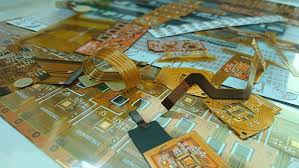
Challenges Faced by Flexible PCB Manufacturers
The biggest financial challenge faced by flexible pcb manufacturer is managing the cost of producing multilayer flexible circuits. This is largely due to the fact that there are additional steps required in the multilayer fab process compared with rigid PCBs, such as photolithography, etching, and drilling. A thorough Design for Manufacturability (DFM) check by a manufacturer can help identify any areas where cost savings may be possible.
One important factor in balancing cost and quality is working closely with your manufacturer. They can help provide insights into cost-effective materials and manufacturing processes, as well as recommend standardizing designs to minimize the number of variations needed for production.
A common problem in flex PCBs is when the solder joints are too close to the bend point. This can lead to cracking of the solder pad or dislodging of the copper trace, a condition that could result in electrical failure. This is one of the reasons that it is so vital to follow design rules, like a minimum bend radius, when designing a flex PCB.
Other technical challenges include thermal management and fabrication limitations. The unique shapes of some flex PCBs can prevent them from integrating with traditional heat sinks and cooling systems, increasing the risk of overheating. Engineers can overcome these obstacles by using advanced thermal simulation software and optimizing the layout for cooling.