
Flex PCB Manufacturers Handle Confidential Designs
For PCB manufacturers to be able to build and deliver your circuit boards, they must have access to your design files. This information is often confidential and should be kept secure to protect your product, business and intellectual property. It also helps ensure that no one else can copy or replicate your design or build a similar product. This is why it is important to encrypt all of your file formats, schematics and related documents before sending them to any PCB manufacturer.
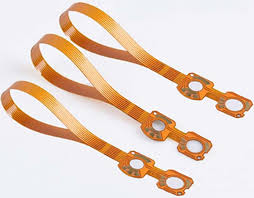
PCBs are primarily used for electrical devices that require electronic components and signals to be transmitted across a board. Depending on the product, these can range from simple mobile phones to advanced medical equipment. The emergence of new technology has resulted in more and more applications that demand flexible printed circuit boards (flex PCBs). Compared to rigid PCBs, flex PCBs are much thinner and can be bended around 360 degrees without snapping or breaking. They are more durable and provide better performance than previous generations of PCBs.
These flex pcb manufacturer are typically built using polyimide (Kapton) material and one to multiple layers of copper. These materials make them more flexible and allow for better heat dissipation. The copper is bonded to the substrate either with acrylic or epoxy-based adhesives. It is possible to use an adhesive-less material, but this can increase manufacturing costs significantly.
How Flex PCB Manufacturers Handle Confidential Designs
Other material options are also available to improve the durability and thermal stability of a flex PCB. For example, FR4 or polyamide stiffeners are frequently added to the outer layer of a multi-layered flex PCB. This reduces wrinkling or buckled caused by thermal stresses. The stiffeners can also help to control signal line impedance.
A key factor in the longevity of a flex PCB is the thickness of its conductor layers. The minimum conductor thickness is 0.003 inch. To ensure that these thin layers can be bent without causing damage, it is essential to include a bend radius of 100 times the finished board thickness. This is a design consideration that needs to be addressed early on in the design process.
Lastly, a shielding layer is often included on the surface of a flex PCB to prevent electromagnetic interference (EMI) and other potential problems. This is particularly helpful in sensitive electronics that are easily disturbed by external sources. The shielding layer also helps to reduce noise and enables a tighter control of signal line impedance.
Ultimately, a flex PCB requires much more complex assembly than a rigid one because of the extra material and flexibility. It is therefore more prone to snafus in the manufacturing process and pushes back delivery lead times. Fortunately, a well-planned design and thorough optimization for production can help to minimize these delays. You can also take advantage of our detailed calculator to check how your flex PCB will cost before submitting it for fabrication.