
Cost of Flexible Printed Circuits
Flexible printed circuits are key components in a wide range of electronic products. They provide the interconnection between the main rigid PCB and connectors, displays, man-machine interfaces (rotary controls, buttons) and other devices, enabling them to operate in challenging environments such as vibrations and mechanical stress. However, they also can be expensive to produce. Fortunately, by understanding what influences the cost of flex circuits you can be more effective in designing them for optimum value and cost effectiveness.
The number of conductive layers in a flexible printed circuits stackup is one of the biggest factors influencing cost. This is because the more layers a flexible circuit board has, the more materials and processing steps are required to make it function. 2-layer flex PCBs are the most common and typically the least costly. Thicker flex circuits also cost more. But thickness cannot be reduced beyond a certain point without negatively impacting durability and manufacturability.
Conductor size is another major factor influencing cost. Using smaller traces allows you to use thinner copper foil, which decreases the overall cost of the flexible circuit. However, if you use too small of a trace width, the flexible circuit may not be able to function as designed. Therefore, it is important to understand the implications of a smaller trace width in the early design phase and be aware of the limits of what a specific copper foil can do in terms of functionality and reliability.
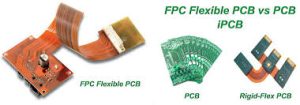
What Factors Influence the Cost of Flexible Printed Circuits?
Other factors influencing the cost of a flex circuit include design complexity, lead time, and production volume. These are all related to the level of effort and precision required during manufacturing to ensure that the flex PCB will be able to operate properly. For example, when a flex circuit is designed with fine pitch components, which have narrower lead pitches than standard components, special equipment and extra steps must be taken to ensure that all of the components fit correctly. These factors can add up to significantly increase the cost of the flex circuit.
In addition to the above factors, a flex PCB’s price can be affected by its material selection and base layer. The most popular insulating film materials are polyimide and polyester. The former is non-flammable, has good geometric stability and high tear strength. The latter, on the other hand, is less durable, more prone to absorbing moisture and has a lower welding temperature than polyimide.
Finally, the production volume is a crucial factor influencing the cost of a flex PCB. When you order a large quantity of a single flexible circuit, the total cost per unit goes down, as does the labor involved in making it. However, the opposite is true when you order a low volume of a single flex circuit. This is because the manufacturer must invest more time and resources into creating a single, individual part, which drives up costs. Therefore, it is important to know the approximate quantity you need when requesting a quote for a flexible circuit.