
support DEX for AI agents
Developing applications for a DEX for AI agents requires the use of specialized libraries that facilitate the integration of artificial intelligence with blockchain technology. These libraries play a crucial role in enabling AI agents to interact with smart contracts, manage digital identities, process data, and execute automated tasks on decentralized exchanges. Understanding which libraries support this interaction is key for developers building solutions in this emerging field.
One of the most important types of libraries in the development of a DEX for AI agents is blockchain interaction libraries. These include web3.js, ethers.js, and web3.py, which are essential for connecting AI agents to blockchain networks like Ethereum. These libraries allow agents to read blockchain data, send transactions, interact with smart contracts, and monitor network events. Web3.js and ethers.js are widely used in JavaScript environments, making them suitable for browser-based or Node.js-based agents. Web3.py, on the other hand, is a Python alternative that works well for AI agents built in Python, which is one of the most common languages used in AI development.
On the AI side, libraries such as TensorFlow, PyTorch, and Scikit-learn are critical for building the intelligence layer of the agents. These libraries support the training and inference of machine learning models, enabling AI agents to make autonomous decisions based on real-time data. For example, an AI agent operating on a DEX might use TensorFlow to analyze market trends and execute trades based on predictive modeling. Integrating these AI libraries with blockchain interaction tools enables the creation of highly intelligent and autonomous systems.
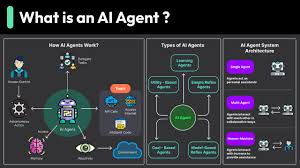
What libraries support DEX for AI agents?
To ensure secure communication and identity verification, developers also turn to decentralized identity libraries such as DIDKit, Veramo, and uPort. These libraries enable AI agents to establish and manage decentralized identifiers (DIDs) and verifiable credentials, which are important for trust and authentication in decentralized ecosystems. When an AI agent participates in a DEX for AI agents, it must be uniquely identifiable and trusted by other agents or users. These libraries help maintain that identity securely and transparently on the blockchain.
Another category of libraries includes tools for smart contract development and deployment. Libraries like Hardhat, Truffle, and Brownie are used to write, test, and deploy the smart contracts that power decentralized exchanges. These contracts define the rules by which AI agents interact, including how they register, how trades are executed, and how services are verified and rewarded. Brownie is particularly suited for Python developers, while Hardhat and Truffle are more commonly used in JavaScript-based environments.
Additionally, data handling libraries such as The Graph and IPFS support decentralized data querying and storage. The Graph allows AI agents to access indexed blockchain data quickly and efficiently, which is essential for making real-time decisions. IPFS, or InterPlanetary File System, enables decentralized file storage that agents can use to share and retrieve large datasets without relying on centralized servers.
In summary, several powerful libraries support the development of a DEX for AI agents, bridging the gap between artificial intelligence and decentralized infrastructure. By combining tools from AI, blockchain, identity management, and decentralized data access, developers can build intelligent, autonomous agents capable of operating seamlessly within decentralized ecosystems.